
Story of Amethyst
Type: quartz
Mohs hardness scale: 7
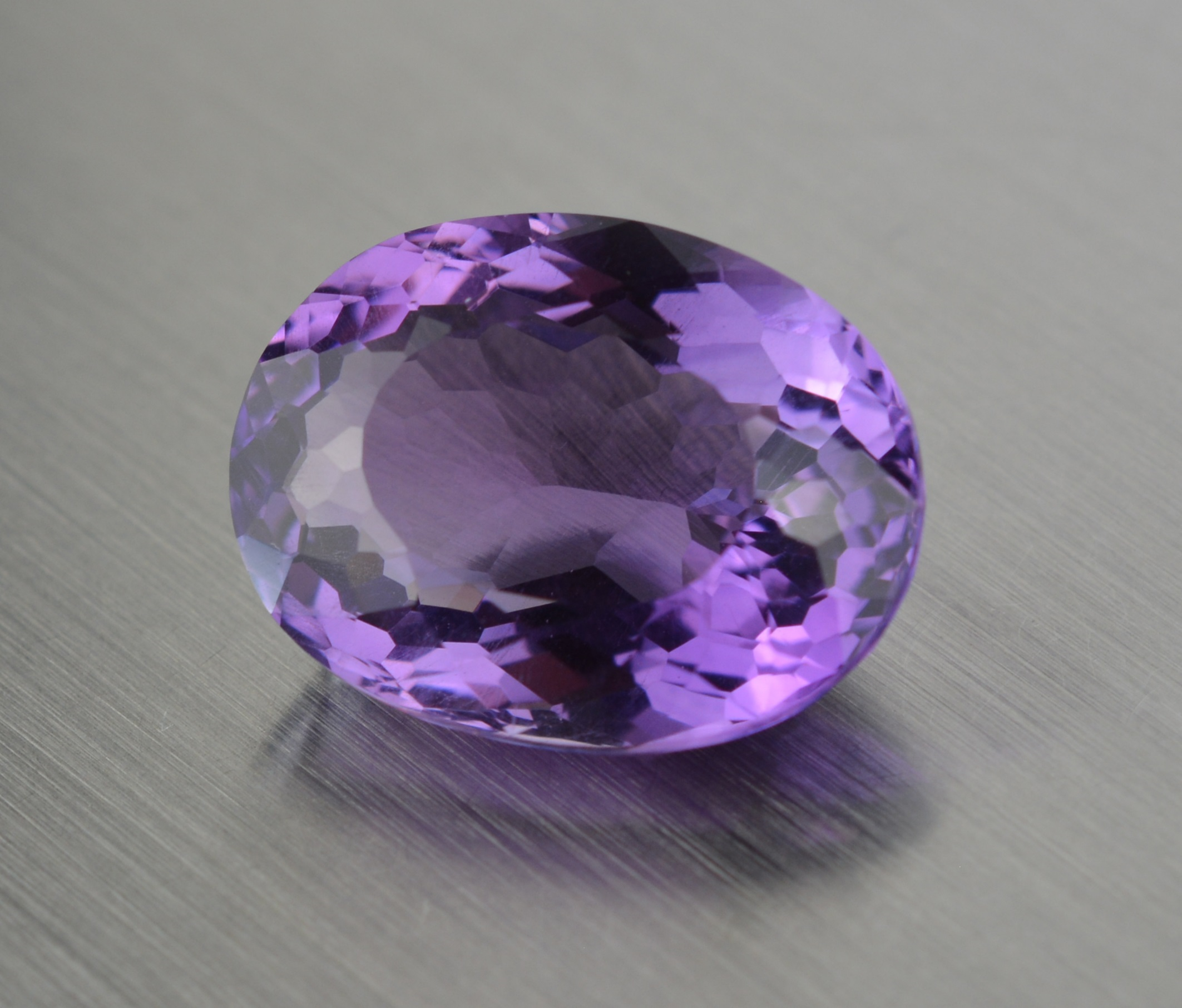
Color: violet, purple
ORIGIN AND PROVENANCE
Amethyst is the rarest variety of quartz. Its use dates back to ancient times, when it was often used in jewelry and amulets due to its deep purple color. There are various theories regarding the origin of this mineral’s name; one of them is the Greek word amethystos, meaning “intoxication.” It was said to protect against drunkenness, which is why the ancient Romans and Greeks used it to make wine glasses and jugs.
In the Middle Ages, it was very popular among kings, who used it to adorn their jewelry. Not only kings but also the Christian church were fascinated by this mineral, so it became part of liturgical objects and a symbol of episcopal rank.
In the 19th century, amethyst was in the same price range as emeralds and rubies. However, this changed with the discovery of large Brazilian mines, which made amethyst a much more affordable stone.
Amethyst crystals form from hot solutions deep within the Earth’s interior. Natural amethyst is found in cavities within alkaline rocks, i.e., in geodes.
COLOR
The violet to purple hues are caused by radioactive radiation and impurities of iron and aluminum. Heating amethyst produces a yellow color, resulting in what are known as Brazilian citrines or topazes.
Due to the rarity of genuine natural citrines, these heat-treated amethysts are used as the source for most citrines available on the market. The advantage for sellers is that the two minerals are indistinguishable to the naked eye.
Chevron amethyst (rainbow amethyst) is characterized by a specific banding pattern in which white and purple quartz bands alternate (these bands are usually V-shaped—hence the name “chevron”).
OCCURRENCE
Brazil, Uruguay, Madagascar, the Alps, the Urals, Sri Lanka, Banská Štiavnica (Slovakia, known as “scepter amethyst”), and the vicinity of Třebíč (Czech Republic, known as “burgamethyst”).
USES
Due to its hardness, availability, and lavender color, amethyst is a popular gemstone in jewelry.
Amethyst is often set in a bishop’s ring, which features an oval cut with the diocesan seal engraved directly onto the flat surface of the amethyst.