
Rose quartz characteristics
Type: Quartz
Mohs Hardness Scale: 7
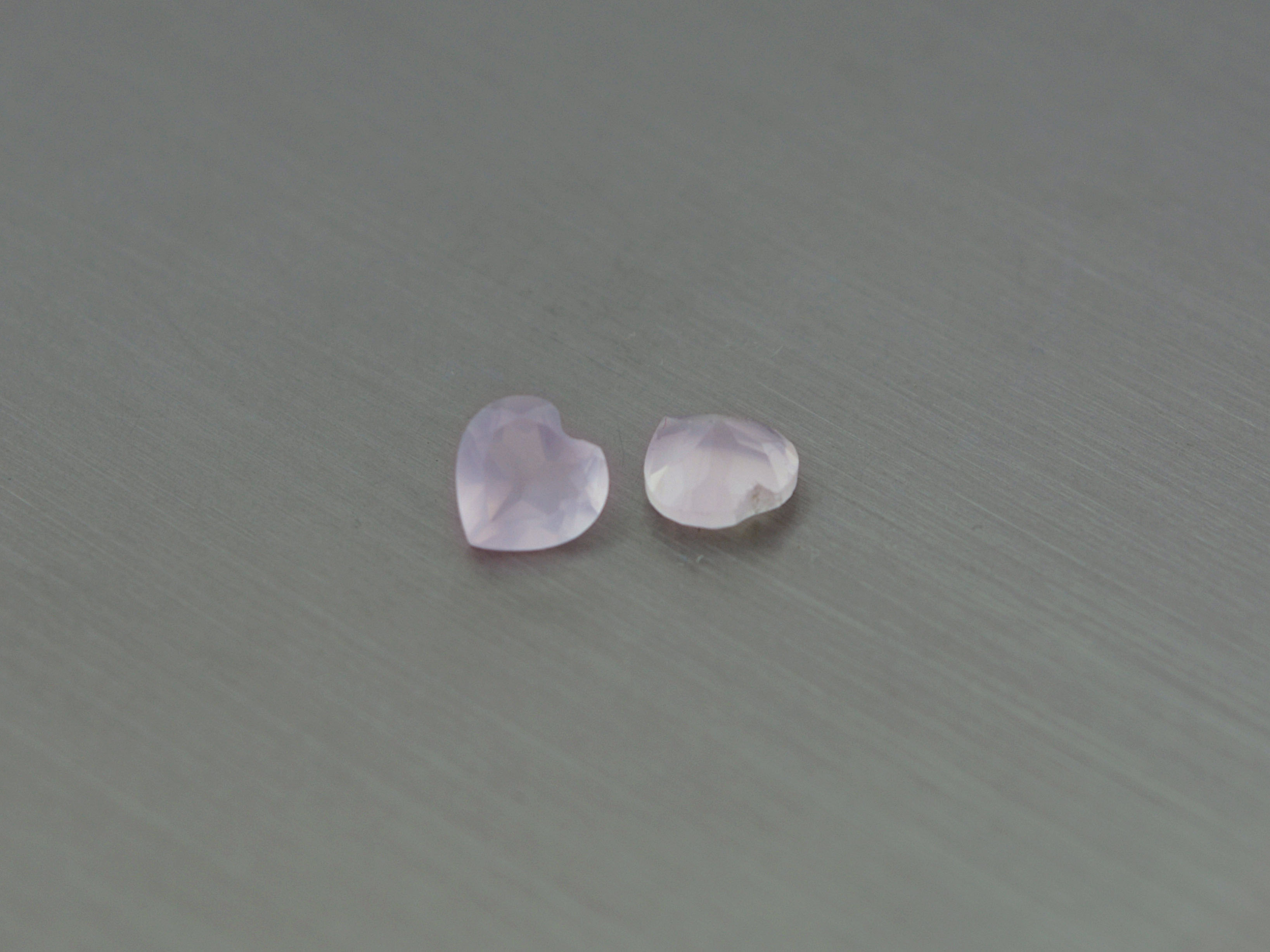
Color: pink
ORIGIN AND PROVENANCE
Rose quartz is a pale pink, translucent, macrocrystalline variety of quartz whose color is caused by manganese, iron, and titanium.
Although quartz is the most common mineral on Earth, rose quartz is its rarest form.
It occurs naturally in pegmatites as massive aggregates and, rarely, as small crystals.
COLOR
The color of rose quartz ranges from pale pink to cream to a medium dark pink.
The most beautiful shades of pink are usually found in large pieces of rose quartz, while smaller pieces are often pale to light in color.
Many experts advocate distinguishing rose quartz from so-called “rose quartz” (crystallized rose quartz mined in Brazil), which, unlike rose quartz, occurs in regular, well-defined crystals and exhibits greater transparency, making it more suitable for use in jewelry.
Another distinguishing feature is its reaction to UV light: rose quartz loses its color when exposed to UV light but regains it after exposure ends. Rose quartz is not as sensitive to ultraviolet light.
In the 1980s, a transparent rose quartz was discovered in Madagascar; it was the first to be faceted and entered the gemstone market directly.
When cut into cabochons, rose quartz can exhibit optical phenomena such as asterism or the cat’s-eye effect. Asteric rose quartz forms a six-pointed star due to the presence of rutile needles. Another optical phenomenon that occurs in rose quartz is the very rare Tyndall effect in minerals, in which light passes through the mineral and is scattered by tiny particles, resulting in a blue glow (rose quartz from Madagascar).
OCCURRENCE
Madagascar (highest-quality rose quartz), Brazil (largest deposit of rose quartz), India (Khairi), South Africa, Czech Republic (Vysočina, Laštovičky, Bobrůvka, Kněževes), Myanmar, Afghanistan
USES
Rose quartz has been used in jewelry making for thousands of years. The cloudy to milky appearance of rose quartz is cut into beads or cabochons.
The most famous piece of rose quartz is called La Madonna Rosa (it visually resembles the Virgin Mary) and consists of a cluster of gneiss crystals surrounded by rose quartz.