
Story of Olivine/Peridot
OLIVINE/PERIDOT
Type: Non-silicates
Mohs hardness scale: 6.5–7
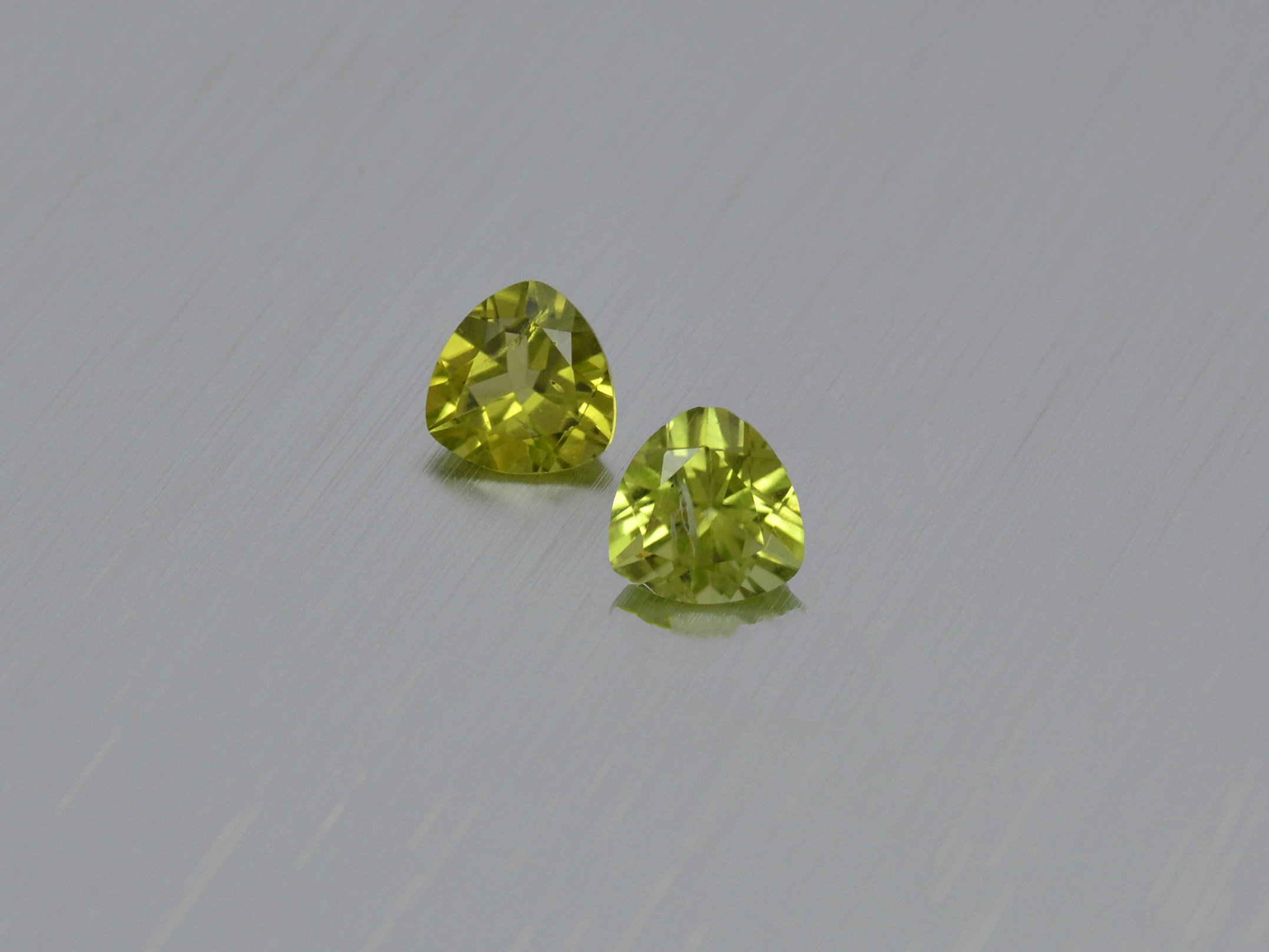
Color: yellow-green, olive, yellow, brown
ORIGIN AND PROVENANCE
Olivine represents a transition between the minerals forsterite and fayalite, which contain the chemical elements iron and magnesium in varying proportions; thus, it is not essentially a single mineral, but rather an entire group of minerals.
Most sources list olivine and peridot as a single mineral, but peridot is a transparent, light-green gem-quality variety of olivine, specifically forsterite.
It crystallizes from cooled magma and weathers on the Earth’s surface.
Peridot occurs in the form of irregular concretions (a round stone containing peridot crystals inside).
Peridot was first discovered more than 3,000 years before our era on the island of Topazos.
(today’s Zagarbad Island or St. John’s Island) in the Red Sea in Egypt, and was named Topazios after this island.
The most prized color of peridot is an intense dark green without any yellow or brown undertones. The yellow-green color is caused by the presence of iron.
ORIGIN
Egypt, Arizona, New Mexico, Norway, Germany, New Zealand, Pakistan, Australia,
Brazil, China, Myanmar
Olivines are sometimes found in meteorites that have fallen to Earth (these meteorites are called pallasites). They may contain polished peridots, which are considered the rarest gemstones of all.
In the 1990s, peridot mining began in Pakistan, where the most beautiful so-called Kashmir peridots, weighing over 100 carats, are found.
Today, 80–95% of the world’s peridot production comes from mines in Arizona (San Carlos Apache Reservation).
USES
During the Crusades, large quantities of peridot were brought to Europe, where it was used as a component in decorative religious objects. It was not until the late 19th century that peridot became a popular gemstone for jewelry in Europe and America.
Due to its high melting point, it is used in the manufacture of technical glass and as an abrasive. It is also used in the production of bricks and casting molds. Additionally, it is used in the chemical industry for the production of fertilizers.