Story of Kunzite
Type: Spodumene
Mohs hardness scale: 6.5–7
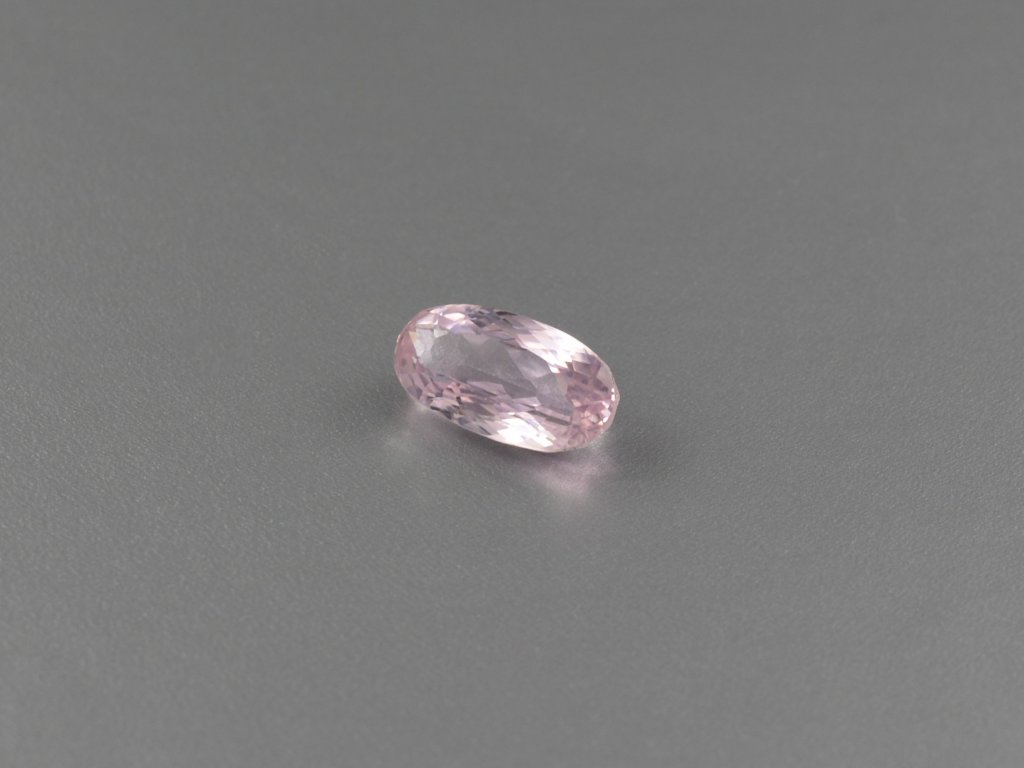
Color: pink, light purple
ORIGIN AND PROVENANCE
Kunzite is a translucent, pinkish, slightly violet variety of spodumene named after the geologist G. F. Kunz (chief geologist at Tiffany & Co.), who first identified and described it in the early 19th century. Kunzite was found in San Diego, California, from where it was sent to the mineralogist Kunz.
The pegmatites in which kunzite occurs are also a source of lithium.
Kunzite is the best-known variety of spodumene; others include hiddenite, green spodumene, and trifane, a yellow variety of spodumene.
COLOR
The color of kunzite is determined by its manganese content. Kunzite is pleochroic, meaning it appears in different colors when viewed from different angles.
Another optical phenomenon exhibited by kunzite is phosphorescence—that is, the phenomenon whereby the mineral glows in the dark after being exposed to sunlight or UV radiation (this phenomenon also occurs in diamonds, among other minerals).
Because its color is faint and pale, kunzite is often irradiated or heated to enhance its pinkish-purple hue.
Its color may fade in sunlight (similar to amethyst, citrine, or chrysoprase).
ORIGIN
California, Madagascar, Brazil, Afghanistan, Pakistan, Nigeria
Interestingly, kunzite often occurs in nature as large crystals that contain only a few inclusions. The largest polished kunzite weighs 880 carats and is heart-shaped.
USES
Kunzite is primarily used in jewelry, where it is cut into facets.
Demand for spodumene depends on the use of lithium in manufacturing, as spodumene consists of silicates and lithium and is a significant source of lithium. Lithium is used in the production of car batteries, cell phone batteries, laptop batteries, etc. Up to 80,000 metric tons of spodumene are mined annually worldwide. Australia (the Greenbushes mine) is currently the largest producer of spodumene.