
Story of Chalcedony
CHALCEDON
Type: natural quartz
Mohs hardness scale: 6.5–7
Color: gray-blue, gray, gray-brown, gray-white, milky white
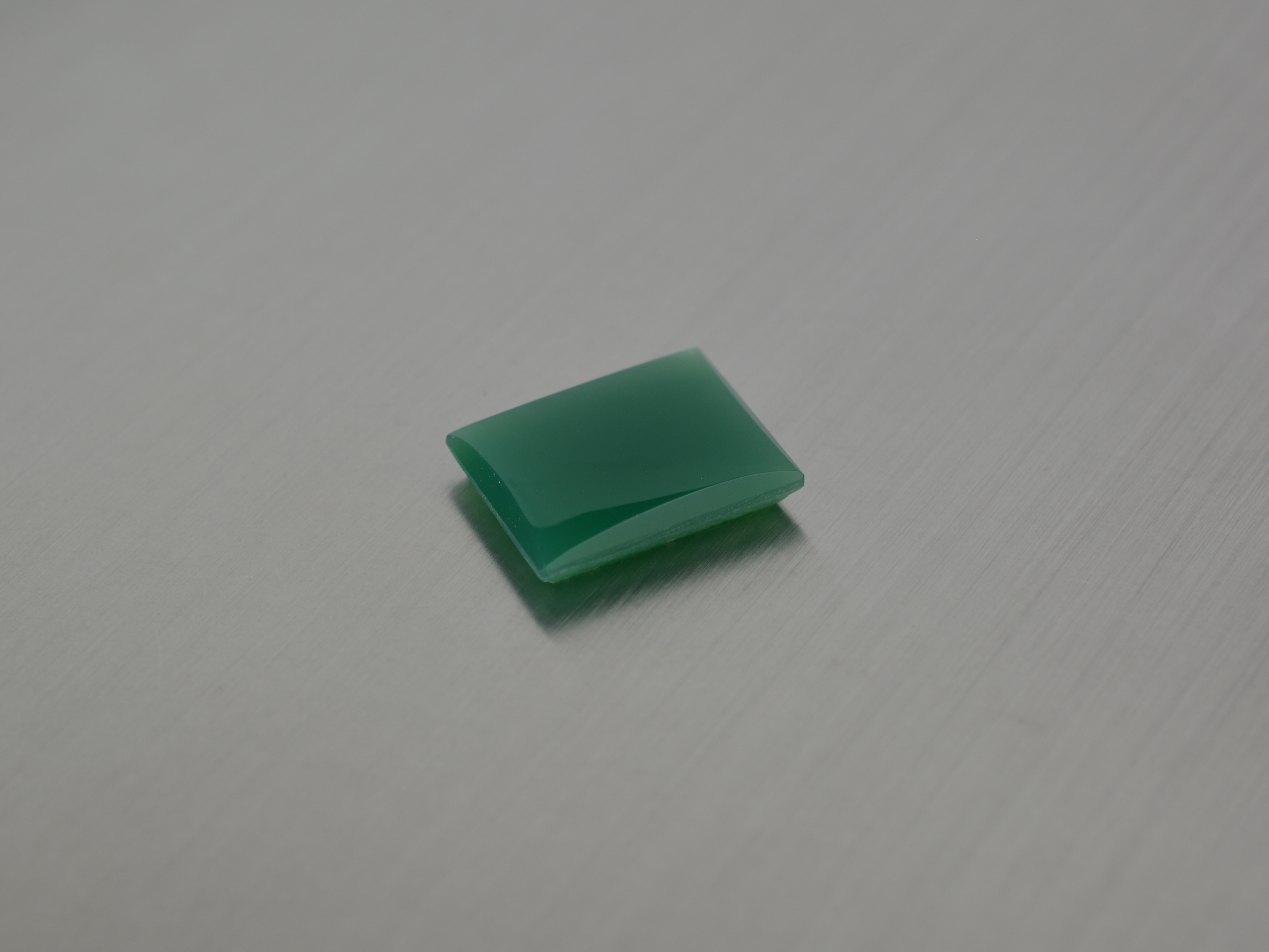
ORIGIN AND PROVENANCE
Chalcedony is a specific microcrystalline variety of quartz, differing from it in a number of properties and in its mode of formation. It is named after the ancient city of Chalcedon (in present-day Turkey).
Chalcedony forms in various cavities, often within cooling magma, through the precipitation of silicate solutions. It is often found with inclusions of opal. In nature, it is found, for example, in amethyst geodes, where it forms their lower edge. Because chalcedony is a variety of quartz, it is very widespread and can be found all over the world. It consists of clusters—accumulations of fine fibers that form opaque layers.
There are several types of chalcedony; for example, red chalcedony is called carnelian, chrysoprase is apple-green, jasper is a colorful mixture of chalcedony, quartz, and opal, and green chalcedony with red spots is called heliotrope. Another variety of chalcedony is agate, which also includes black onyx.
The most valuable variety of chalcedony is greenish chrysoprase, which owes its color to an admixture of nickel.
A special type of chalcedony is Uruguayan enhydros chalcedony, which contains residual water in its cavities and is known in our region as “agate with water.”
ORIGIN
Namibia, the United States, Mexico, Brazil, Turkey, Australia, India, Russia, Madagascar, the Czech Republic (Kozákov, Nová Paka, Milevsko, the Ore Mountains).
USES
Chalcedony is used in jewelry making and the haberdashery industry. In ancient times, it also had technical applications, such as for storing tools and for making scales and graters.
Chalcedony is most often cut into cabochons or polished with sand and glass into tumbled stones, beads, and cameos.
Chalcedony is not sensitive to heat; when iron is added, it actually heats up and changes color to shades of red.