Story of Ametrine
Type: quartz
Mohs hardness scale: 7
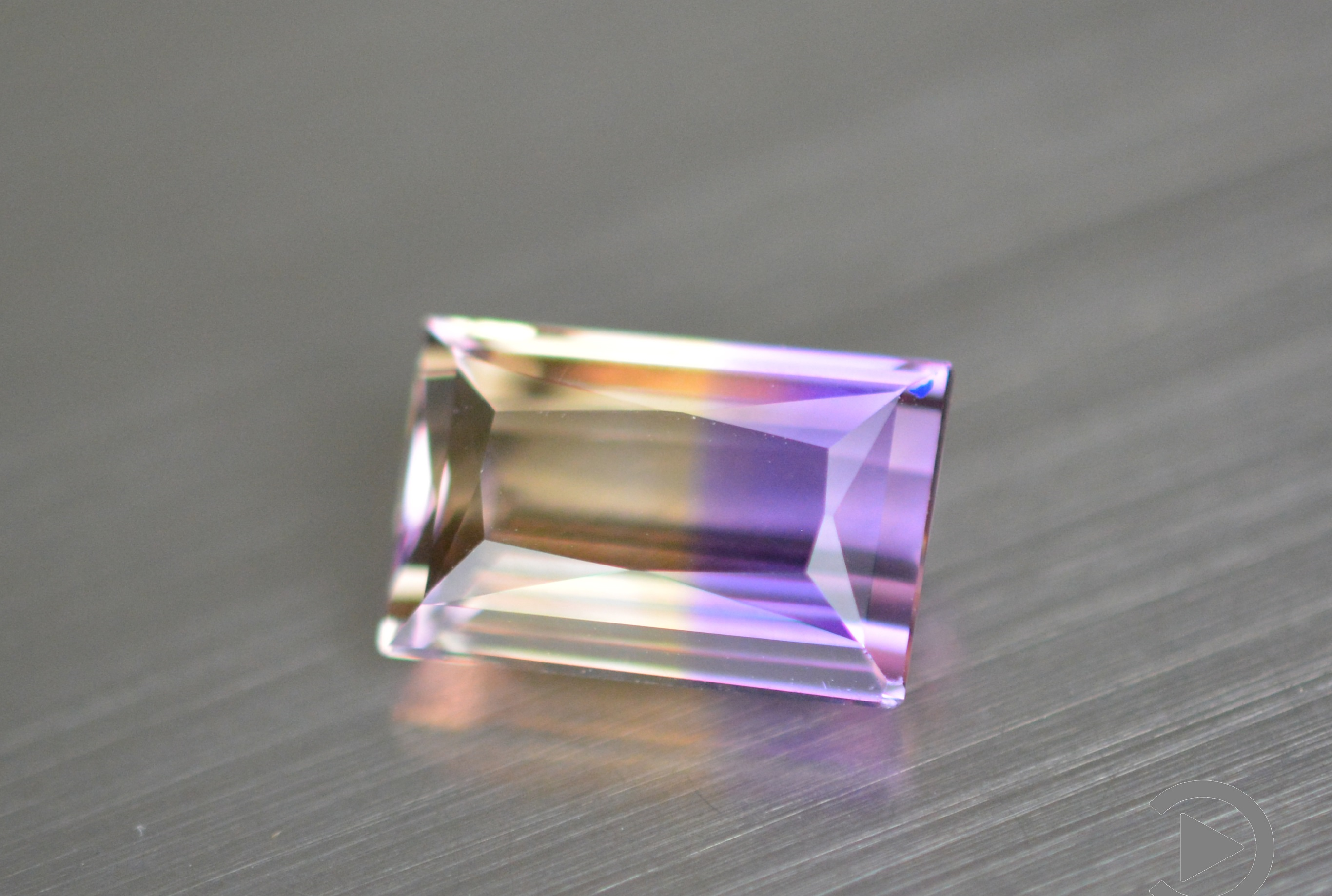
Color: violet-yellow, purple-yellow
ORIGIN AND PROVENANCE
As the name suggests, this is a combination of amethyst and citrine occurring within the same crystal. The specific color of the amethyst depends on the crystallization temperature and is caused by varying degrees of iron oxidation.
This variety of quartz is also known as bolivianite. The name is derived from the country where it is most commonly found—Bolivia—which is home to the only commercial mine for natural ametrine and has become a symbol of the country. Interestingly, since 2009, only polished ametrine may be exported from Bolivia.
Ametrine is a relatively new gemstone, having first appeared on the market in 1980.
CUT
Given the mineral’s two colors, cutters strive to cut ametrine so that both colors are displayed to their best advantage in equal proportions, which often results in entirely new, unconventional, and unusual cuts that are highly popular in the jewelry industry due to their uniqueness.
COLOR
High-quality ametrine is characterized by medium-dark yellow tones and bright to intense violet colors.
As with most colored minerals, color plays an important role in determining the price of ametrine. Larger ametrines, which typically weigh more than 5 carats, have more vivid colors and therefore command the highest prices.
Larger ametrines are generally free of flaws and inclusions visible to the naked eye.
Due to the blend of colors ranging from violet to yellow, no two ametrines will ever be identical.
ORIGIN
Bolivia (Anahí Mine), Brazil, India
USES
Ametrine is most commonly used in jewelry, where it is sought after by discerning jewelry lovers for its unique cut and bicolor appearance.
Ametrine has been part of the collections of famous monarchs, such as Queen Sofia of Spain and Empress Michiko of Japan.