
Story of Topaz
Type: topaz
Mohs hardness scale: 8
Color: colorless, white, blue, yellow, orange, pink, brown, green
ORIGIN AND PROVENANCE
Topaz is an aluminum fluoride silicate. This mineral is allochromatic, meaning its color is caused by impurities or defects in its crystal structure, not by elements in its chemical composition.
COLOR
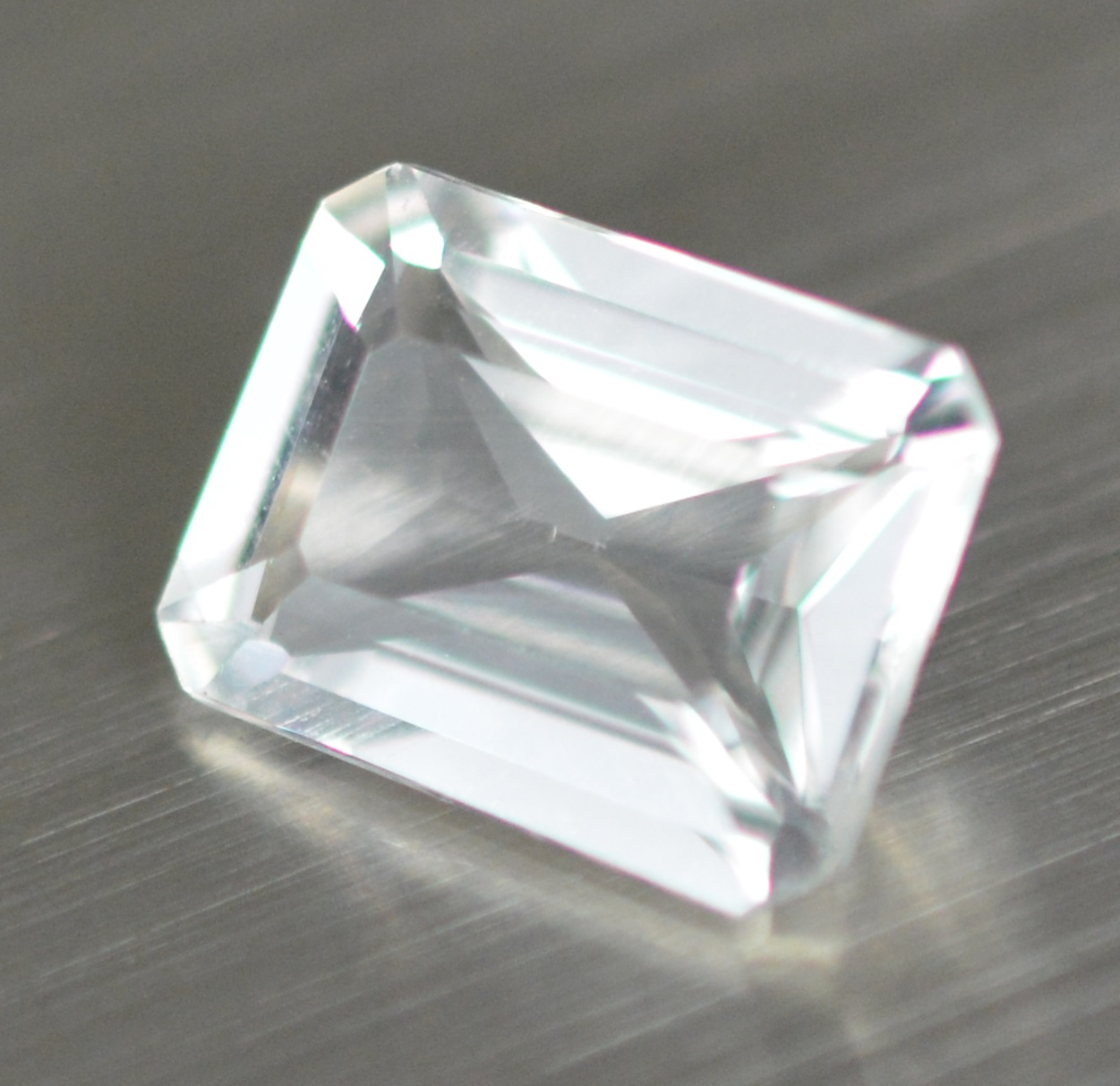
In nature, topaz usually occurs as a colorless or light gray mineral. For this reason,
topaz is irradiated and heated. First, the stone is irradiated to give it a brown color, and then the brown mineral is heated to achieve a permanent blue color.
Heat-treated blue topaz is most commonly used in jewelry. In nature, blue topaz is very rare.
As with most colored gemstones, the color of topaz plays the most important role in determining its price. The rarest are pink, red, and golden-orange topazes.
Imperial topaz is an intensely red-orange gemstone whose color is produced by the addition of chromium. It is found exclusively in the Ouro Prêto mine in Brazil. Imperial topaz is the most expensive of all topazes.
Mystic or rainbow topaz is a colorless topaz that has been treated using CVD technology, in which a thin layer of titanium and gold is applied to its surface. As a result, the topaz not only sparkles but also begins to shimmer with all the colors of the rainbow.
Since blue topaz is the most common color on the market, we distinguish between various shades of blue. Sky blue is a light, sky-like blue color. Swiss blue, on the other hand, is a more intense medium blue, while London blue is a dark blue.
ORIGIN
USA (Utah—Topaz Mountain), Brazil (Minas Gerais, the largest source of topaz), Russia, Australia, Mexico, Pakistan, Czech Republic (Písek, Rožná, Cínovec, Krupka, Horní Slavkov).
USES
Thanks to its hardness, wide range of colors, and affordability, topaz is widely used in jewelry.