Story of Ruby
Type: corundum
Mohs hardness scale: 9
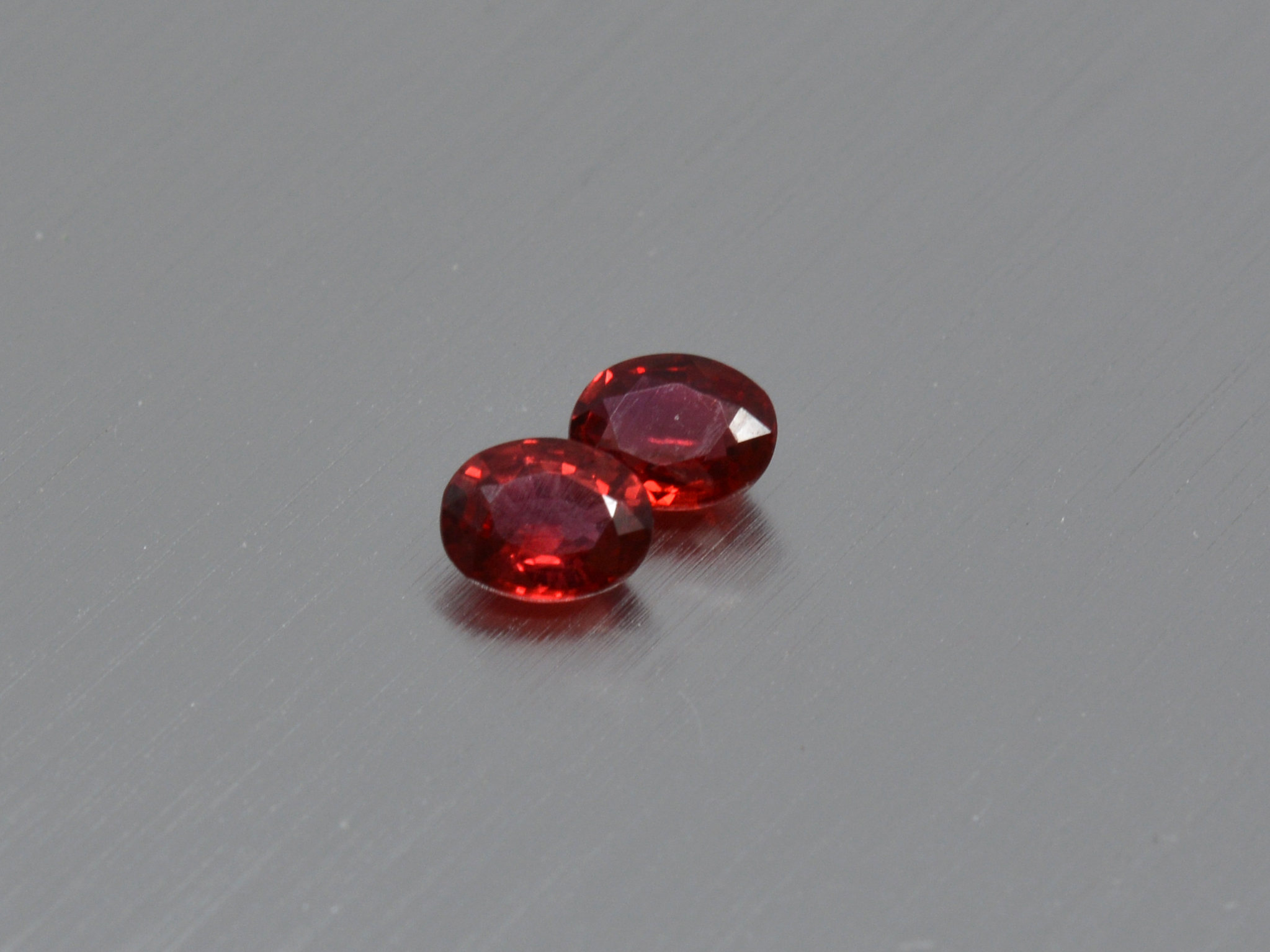
Color: light red, reddish-pink, raspberry, dark red
ORIGIN AND PROVENANCE
A ruby is a red variety of corundum, whose color is caused by the presence of chromium. The name is derived from the Latin word ruber, meaning red. It is one of the “Big Four”—that is, the most expensive gemstones—along with the diamond, sapphire, and emerald (until the 19th century, amethyst was also included in this group, but after the discovery of large deposits in Brazil, it was no longer as rare).
COLOR
The most valuable color is the so-called “pigeon’s blood”—a deep red with a slight blue tint—which originates from Myanmar. Unheated rubies of a deep red color weighing over 1 carat are very rare and are often heated to achieve the best possible color. At this top quality, the price of a ruby can exceed that of a diamond.
Rubies from Sri Lanka have a raspberry color and can also be found in the form of star rubies. This pearly star inside the ruby is caused by rutile needles and appears as a three-pointed or six-pointed star.
The most beautiful and largest star ruby is the Rosser Reeves ruby, which weighs at least 140 carats.
Some experts classify very pale pink rubies as pink sapphires, precisely because of the lack of color intensity typical of rubies.
ORIGIN
Myanmar (Mogok, “Valley of Rubies”), Africa, Asia, Australia, Madagascar, the United States (North Carolina), Greenland.
USES
In the Middle Ages, astronomers cut rubies into telescope lenses, and they were used as inserts in mechanical watches. In 1960, a synthetic ruby was used to produce the first laser.
The hardness of the ruby makes it an ideal stone for cutting and setting in jewelry.
The most famous faceted ruby is the Carmen Lucia, which weighs 23 carats and is the largest faceted ruby from Myanmar.
The most expensive gemstone (excluding diamonds) is the Sunrise Pigeon Blood ruby (at least 26 carats).