Story of Opal
Type: Mineraloid
Mohs hardness scale: 5.5–6
Color: colorless, white, yellow, red, orange, green, brown, black, blue, pink
ORIGIN AND PROVENANCE
Opal is a hydrated amorphous form of silicon dioxide, SiO₂·nH₂. Its water content can range from 3 to 21% by weight, but is usually between 6 and 10%. Due to its amorphous nature, it is classified as a mineraloid, unlike the crystalline forms of silicon dioxide, which are considered minerals.
It is believed that the name “opal” derives from the Sanskrit word upala (gemstone) and later from the Greek derivative opállios (to see a change in color).
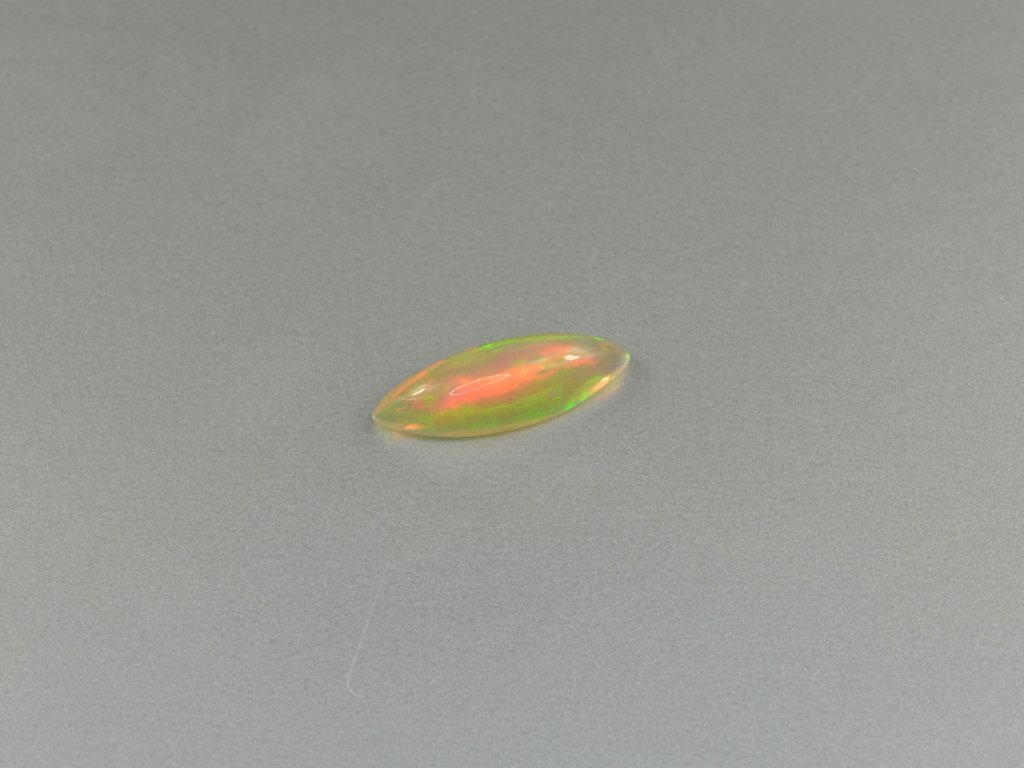
There are two main classes of opal: precious opal and common opal. Precious opal exhibits a play of colors (iridescence) that common opal does not have. The play of colors is defined as “a pseudochromatic optical phenomenon in which colored flashes of light from certain minerals are transformed into white light.” The internal structure of precious opal causes the refraction of light, resulting in the play of colors.
COLORS
Depending on the conditions under which it forms, opal can be transparent, translucent, or opaque, and the background color can be white, black, or nearly any color in the visible spectrum. Black opal is considered the rarest, while white, gray, and green opals are the most common.
ORIGIN
In ancient times, opal was rare and highly prized. Until the discovery of major deposits in Australia in the 19th century, the only known source of opal was Cervenica, located beyond the Roman frontier in Slovakia, in a mine that is now closed. Opal is Australia’s national gemstone.
The main sources of opal are Australia and Ethiopia.