
Story of Onyx
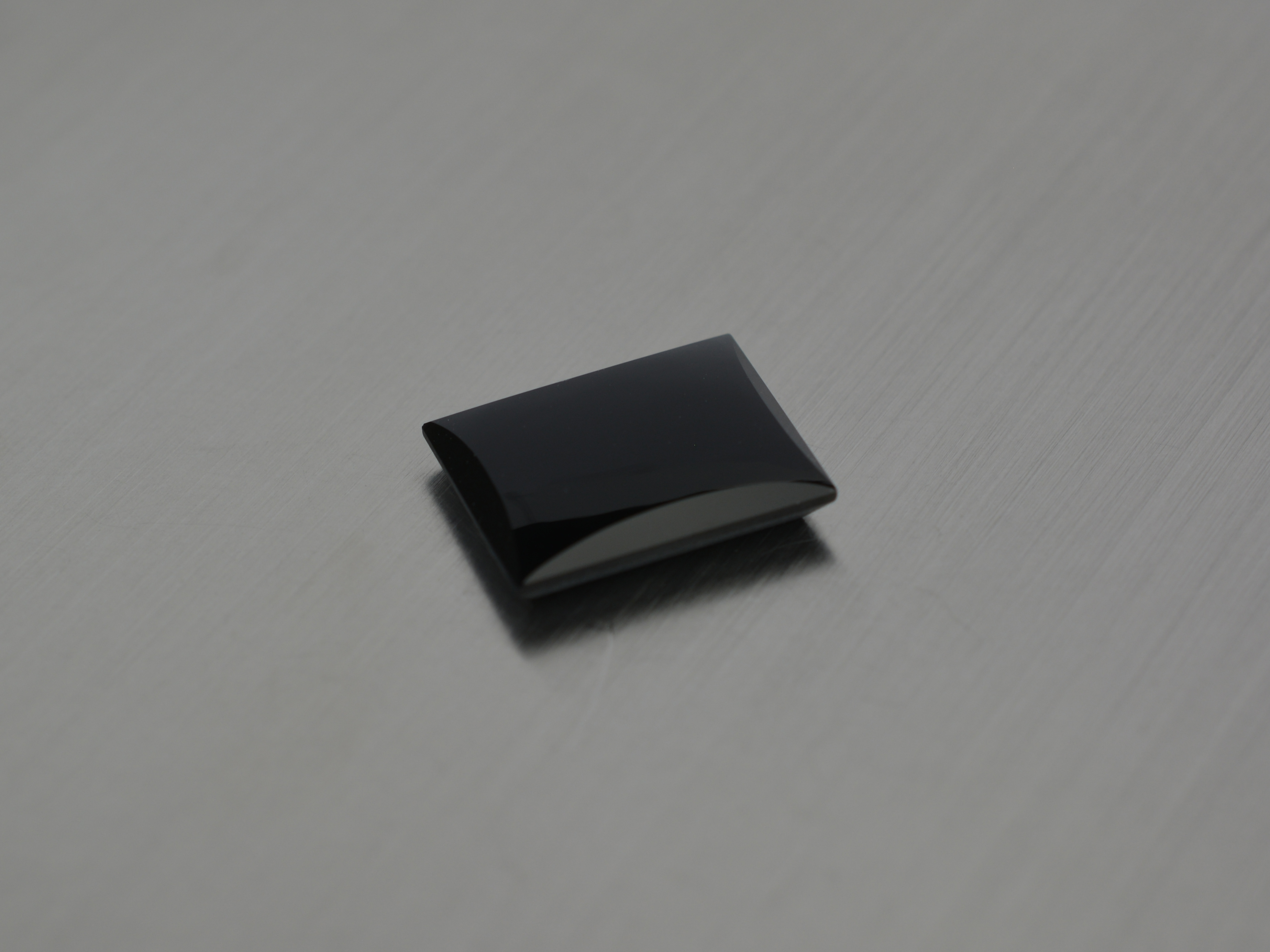
ONYX
Type: chalcedony
Mohs hardness scale: 6.5–7
Color: black, white, red, green, yellow
ORIGIN AND PROVENANCE
The word “onyx” comes from the Greek ónx, meaning “fingernail” or “claw,” because onyx, like a fingernail, consists of many layers.
Onyx is the name for two different types of stone. The first is a limestone rock; the second is a mostly black, microcrystalline, opaque variety of chalcedony.
Onyx has been used as a gemstone since ancient times and was carved and crafted into cameos. In ancient Egypt, onyx was used to make kitchen utensils, vases, statuettes, jewelry, and ornaments.
It was one of the most important stones for carving and one of the greatest protective amulets.
Despite its opacity, onyx is characterized by a remarkable luster.
COLOR
Unlike agate, which has curved bands, onyx has straight, nearly parallel bands—that is, uniform layers of color that are mostly black and white (though they can also be brown, green, red, yellow, or blue). This typical black-and-white onyx is commonly referred to as true or Arabian onyx.
Black onyx is the best-known type of onyx, while red onyx, also known as sardonyx, is a red variety of chalcedony with reddish-brown to brown bands.
Niccolo onyx is characterized by very thin bands that appear blue to gray against a black background.
Golden onyx is the name for a layered variety of aragonite of limestone origin.
Onyx is often confused with other minerals, such as obsidian or marble.
ORIGIN
Brazil, Canada, Madagascar, the United States, Slovakia (Levice), the Czech Republic (Podkrkonoší), India, Indonesia, Mexico, Pakistan (Balochistan, the main onyx mining region), Italy, Turkey, Afghanistan, Iran.
USES
Onyx is primarily used in jewelry making, where it is crafted into beads and cabochons.
It is also used to make decorative items, tiles, and tabletops. Black and red onyx are very popular in the production of cameos, where they are most often carved into portraits and various decorative objects and statuettes.