
Story of Moldavite
MOLDAVITE
Type: natural glass
Mohs hardness scale: 5.5–6.5
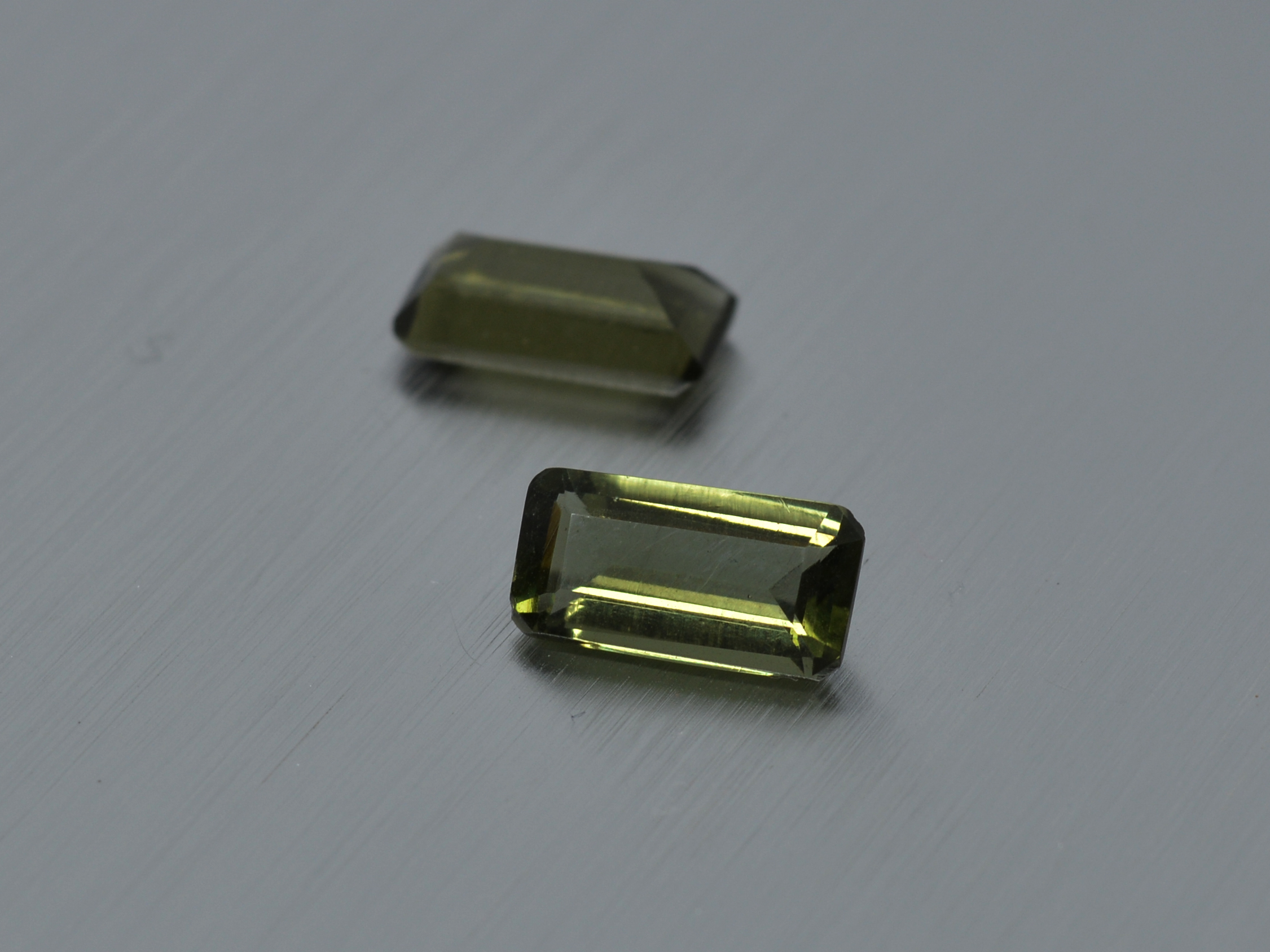
Color: yellow-green, bottle green, olive green, dark green.
ORIGIN AND PROVENANCE
Although moldavite is classified as a gemstone, it is a natural silicate glass, not a mineral. It is named after the Moldau River, near which it is found.
In German, the Moldau is called the Moldau; this is the origin of the name “moldavite,” which is used mainly abroad.
There are several theories regarding the origin of moldavite, but scientists currently lean toward the view that this unique European tektite was formed during a meteorite impact on Earth, during which enormous energy was released, causing the surrounding rocks to melt and subsequently vaporize. The heat and pressure of the impact caused the molten material to be ejected into the atmosphere. In the air, the material cooled and solidified, and as it fell back to the ground, it formed various original shapes, mostly droplets.
This entire process took place 15 million years ago, when a meteorite (about 1 km wide) struck the area of what is now the city of Nördlingen (Bavaria). The largest vltavine deposits are found in southern Bohemia, around the Vltava River, and in Germany.
Since vltavine is not a mineral, it is amorphous, meaning it lacks a crystalline structure.
It occurs in various shapes, sizes, and with different surface textures. The surface of vltavine is called a “sculpture.”
The largest vltavín found in the Czech Republic weighs 265.5 grams (Slavice).
Czech vltavíns are unique in the world for their translucency and, in some cases, transparency. Vltavín is the only tektite in the world of gemstone quality.
Its uniqueness lies in its strong electromagnetic field and low-pressure gas bubbles.
ORIGIN
Austria, Germany, Czech Republic (Besednice, Český Krumlov, Slavice, Netolice, Třebíč).
USES
Vltavine was used as early as the Stone Age to make polished tools.
Today, high-quality moldavites are cut into faceted gemstones or cabochons and set into jewelry.