
Story of Labradorite
Type: feldspar
Mohs hardness scale: 6–6.5
Color: gray, blue, green, yellow, orange
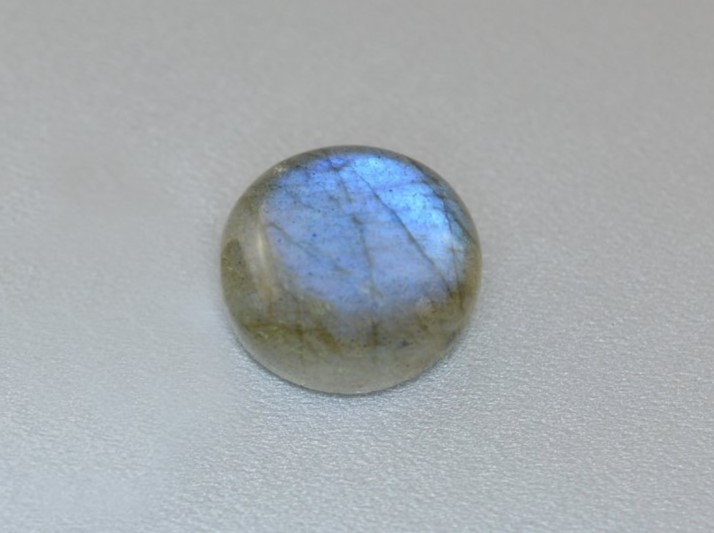
Labradorite is a fascinating mineral that captivates with its beautiful play of colors and unique luster.
Its brilliance is striking. It is a plagioclase feldspar that belongs to the feldspar group and is often found in the form of crystals or rock blocks.
It is often found in the form of crystals or rock blocks.
Labradorite is named after the place where it was discovered in the province of Newfoundland
and Labrador in Canada at the end of the 18th century.
COLOR
Its most characteristic feature is the labradorite luster (metallic luster), an optical phenomenon in which labradorite
reflects a spectrum of colors on its surface—such as blue, green, yellow, or orange—
green, yellow, or orange. These colors create the impression of a glow or shimmer, which makes
labradorite clearly distinguishable from other minerals.
The color of labradorite depends on its chemical composition and the presence of various impurities in the crystal.
crystal.
The best-known and often considered the most beautiful type of labradorite, spectrolite, comes from so-called
Finland. Unlike other labradorites, spectrolite’s sheen covers the entire color spectrum.
(hence its name).
ORIGIN
Its deposits are found in various parts of the world, including Canada, Russia, and Australia,
the U.S., and other countries. Another significant source of labradorite is Norway, particularly the areas
around the city of Larvik. Labradorite found here is known as larvikite. This type of labradorite
is used primarily as a building and decorative stone.
USES
Thanks to its aesthetic value, labradorite is often used in jewelry making—
bracelets, earrings, rings, or other decorative items. Its unique appearance
attracts attention not only in the jewelry industry but also among collectors.
Labradorite is also used as a decorative element in interior design. It can be used as a tabletop
table top, as a facing stone, for floor patterns, or even as a decorative stone in aquariums.
Even as a decorative stone in aquariums.