
Story of Iolite
IOLITE
Type: Cyclosilicate
Mohs hardness scale: 7–7.5
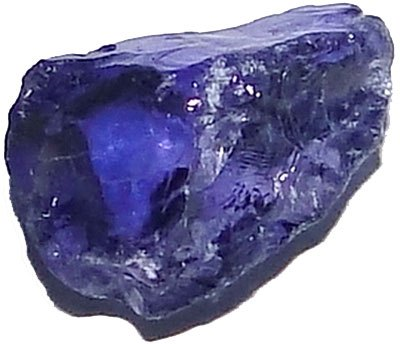
Color: blue, violet
ORIGIN AND PROVENANCE
The name of this mineral comes from Greek, where “ios” means “purple.”
In ancient times, it was called the “Viking compass,” and according to legend, the Vikings used it for navigation at sea.
The Vikings used it for navigation at sea because iolite changed color as soon as sunlight hit it, allowing them to find and track the sun even when the sky was overcast.
It is sometimes also called cordierite (named after the geologist P. Cordier).
Iolite forms in igneous rocks and exhibits strong pleochroism, meaning the stone changes color when moved or viewed from different angles.
Depending on the number of colors present, minerals are classified as dichroic (i.e., two-colored) or trichroic (i.e., three-colored). Iolite is trichroic, meaning it exhibits three colors: blue-violet, pale blue, and pale yellow.
Iolite is a rock mineral rich in aluminum.
COLOR
Thanks to its color, iolite can be a more affordable alternative to sapphire.
Unlike sapphire, iolites are rarely heat-treated, not only because they possess their own beautiful, rich natural colors, but also because they have a low melting point.
However, there are also iolites that are gray or even colorless.
There are several types of iolites. Based on color, iolite is classified as blue iolite (which is most commonly used in jewelry),
jewelry), purple iolite, yellow iolite, colorless iolite, pleochroic iolite, cat’s eye iolite, and sunstone iolite (a variety of sunstone that contains iolite inclusions). If iolite has a deep, rich blue color, it may also be referred to as “water sapphire.”
ORIGIN
Africa (Tanzania, Kenya, Madagascar), India, Sri Lanka, Norway, Brazil, the Czech Republic (Šumava, Novohradské Mountains, Bohemian-Moravian Highlands).
Top-quality iolites weighing over 5 carats are extremely rare finds.
USES
Iolite is used primarily in jewelry. These minerals are cut into faceted stones, but also into cabochons.