Story of Heliodor
HELIODOR
Type: Beryl
Mohs hardness scale: 7.5–8
Color: light yellow, greenish-yellow, orange-yellow
ORIGIN AND PROVENANCE
There are several varieties of beryl. Among the best known and most valuable are emerald, aquamarine, morganite, heliodor, goshenite, bixbite, vorobite, and common beryl (source: Be).
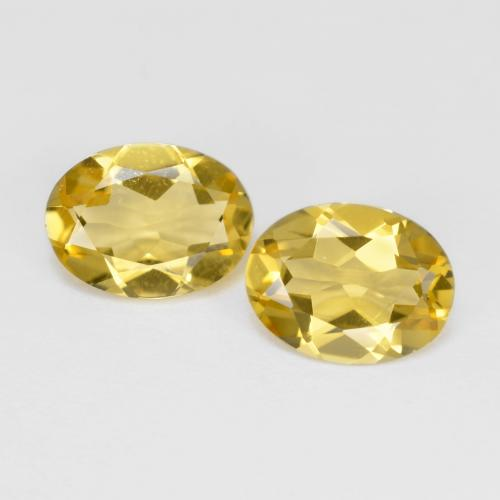
Heliodor is a yellow variety of beryl with a greenish luster. Its name is derived from its sunny color and comes from the Greek word *helios*, meaning “sun” and “giver” or “gift.” Loosely translated, heliodor means “gift of the sun.”
It is also known as golden beryl. Many experts believe it is the same mineral,
while others consider it a different species due to its golden color.
The most common form of beryl found in nature is yellow-green in color, and its crystals can reach lengths of several meters (beryl columns 6 meters long have been found in Maine, USA).
Beryl is of magmatic origin and occurs in granite pegmatites.
OCCURRENCE
Ukraine (Volyn, Volodarsk), the Urals, Brazil (Minas Gerais), the United States (Maine), Namibia (Erongo), Madagascar, Nigeria.
The first heliodor deposits were discovered in Namibia in the early nineteenth century.
The most spectacular heliodor deposits are found in Brazil (the Bahia and Minas Gerais mines) and in Ukraine (Zhytomyr).
In the Czech Republic, heliodor occurs primarily in pegmatites in the Písek region.
COLOR
As already mentioned, heliodor has a yellow color reminiscent of sunbeams. When heated, the yellow color changes to blue, and the altered heliodor becomes heat-treated aquamarine.
The color of heliodor is often enhanced by irradiation, a practice that is common and accepted in the market.
USES
Beryllium is used in metallurgy, electrical engineering (lighting fixtures), and the aerospace industry.
In the Middle Ages, varieties of beryl were used to cut eyeglass lenses—hence the name “eyeglass.”
Heliodor is also popular in jewelry, where it is most commonly used to create brilliant-cut and cabochon stones with a beautiful cat’s-eye effect.