Story of Emerald
Type: Beryl
Mohs hardness scale: 7.5–8
Color: green
ORIGIN AND PROVENANCE
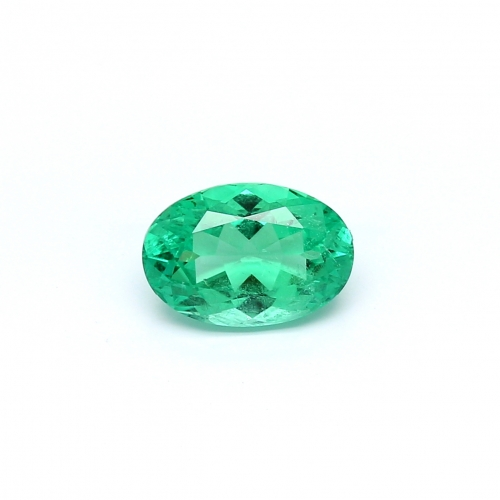
The emerald is a dark green, the best-known and most valuable variety of beryl, whose color is caused by chromium and vanadium. The name comes from the Greek word emeraldus, which means green.
COLOR
As with other varieties of beryl, the intensity and shade of an emerald’s color are the decisive factors in its value. Unlike most gemstones, emeralds are valued primarily for their color and less for their clarity; internal inclusions are widely accepted in emeralds. The highest-quality emeralds—that is, the most expensive ones, which have a beautiful color and perfect clarity and have not been treated in any way (filled with resin or cedar oil)—exceed the price of a diamond and are extremely rare.
There is also green beryl, which, unlike emerald, does not have such intense colors. This means that its color is too light or pale, so it does not meet the requirements to be classified as an emerald.
Some of the most beautiful emeralds are Colombian emeralds, particularly those from the Muzo mines in Colombia. These emeralds are characterized by a bright, intense, even phosphorescent green color.
Please note, however, that the term “Colombian emerald” does not necessarily indicate origin but may simply refer to the color; thus, it could also be a deep-green emerald from a country other than Colombia.
CUT
The emerald cut is named after the emerald because emeralds were difficult to cut due to their numerous inclusions and strong cleavage. Cutters developed a relatively simple cut to minimize their impact on the emerald while still allowing its beautiful color to shine through.
Another special cut developed specifically for emeralds is the so-called “trapiche.”
The largest uncut emerald crystal, weighing nearly 1,760 carats, comes from the Cosquez mines in Colombia.
The largest cut emerald is the Isabella Emerald, weighing 964 carats.
ORIGIN
Brazil, Colombia, Zambia, Russia
USES
The emerald is a very popular gemstone in jewelry, where it is cut into faceted stones and cabochons.