
Story of Aquamarine
AQUAMARINE
Type: Beryl
Mohs hardness scale: 7.5–8
Color: light blue, dark blue, blue-green, rarely yellow
ORIGIN AND PROVENANCE
The name of this mineral is derived from the Latin words *aqua* (water) and *marina* (sea).
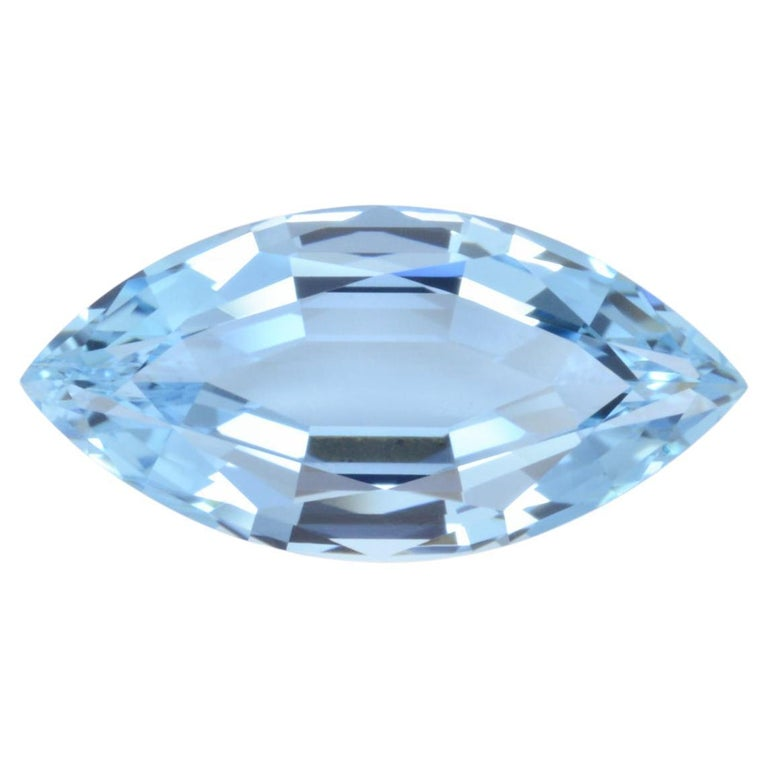
Aquamarine owes its blue color, which resembles the sea, to the presence of iron.
Because of its beautiful color, aquamarine has been set in jewelry since ancient times. It was originally used as an amulet for sailors and as a symbol of eternal, youthful love.
Along with emerald, heliodor, bixbite, morganite, and goshenite, aquamarine is a variety of beryl. It occurs with white feldspar (albite) in granite pegmatites or in druses alongside tourmalines and gemstones. In nature, it is often found in transparent to translucent crystals.
and large specimens that are often free of major flaws.
The largest aquamarine crystal was found in 1910 in Brazilian pegmatites near the town of Marambaia and weighed 110 kilograms.
COLOR
The color of aquamarine is the most important factor in determining its price. Generally, the more vivid and saturated the mineral’s color, the higher its price. The intensity of aquamarine’s color varies depending on the viewing angle. For this reason, aquamarine is known as dichroic.
Like many other minerals, aquamarine can be heated. When heated, the color changes from light blue to white or sky blue, with the yellowish tones and natural blue-green hue disappearing completely.
ORIGIN
Brazil (Minas Gerais), USA (Colorado), Sri Lanka, Zambia, Madagascar, Pakistan, Afghanistan, Namibia.
USES
Thanks to its excellent properties, availability, and beautiful color, aquamarine is a sought-after stone for faceting in the jewelry industry. Aquamarine is most often cut into oval and emerald cuts to best highlight its color.